


Latest updates from Nafeza
Stay informed about the latest news and updates from Nafeza... and always be up to date with everything new.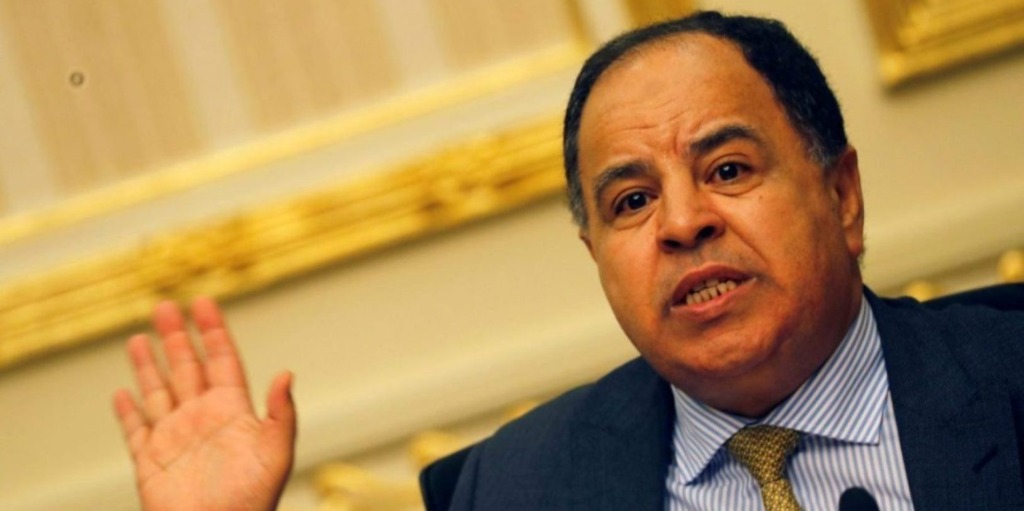
# Minister of Finance: New Incentives to Boost Investment, Expand Production and Exports, and Measures to Reduce Clearance Times, Customs Clearance Costs, and Prices
Ministry of financeDr. Mohamed Maait, Minister of Finance, affirmed that 2019 represented a year of gradual transition to the “Single Window” system and the introduction of customs facilitations that included new incentives for investment and expansion in productive activities, as well as efforts to maximize the competitiveness of Egyptian exports in global markets. He noted that, in line with the principle of transparency and disclosure, and based on the belief that citizens are genuine partners in national responsibility and have the right to access information, the Ministry of Finance prepared a report outlining the progress achieved in modernizing the customs system, re-engineering, simplifying, and automating procedures. The Ministry also aims to further intensify these efforts in the coming year.
The Minister praised the Prime Minister’s decision to establish permanent joint committees comprising one or more representatives from the Customs Authority, the General Organization for Export and Import Control (GOEIC), the National Food Safety Authority, and other relevant authorities responsible for inspecting, examining, and monitoring imported and exported goods in accordance with applicable laws and regulations.
According to a report issued by the Ministry of Finance, in accordance with the Prime Minister’s decision, inspection, examination, and control procedures for imported and exported goods, as well as the collection of samples, are to be completed simultaneously within a period not exceeding three working days from the date of registration of the customs declaration. These procedures are conducted in the presence of all members of the permanent joint committee to verify the type, value, and origin of the goods, their conformity with the declaration and supporting documents, and compliance with the specifications and requirements applicable for their release or export. This is carried out in coordination with all authorities operating at ports, airports, and border crossings, ensuring the facilitation of procedures without compromising effective controls or the collection of public treasury dues.
The report added that representatives of the Customs Authority and the authorities participating in the permanent committees are present at customs ports and inspection areas during the prescribed working hours, whenever required for the opening of containers and packages, inspection, examination, and control of the goods they contain, as well as the collection of the necessary samples.
The Minister noted that 2019 witnessed positive steps toward establishing a national partnership between the Customs Authority and private-sector companies through the implementation of the “Authorized Economic Operator” program. The program is also intended to cover small and medium-sized enterprises so that they can benefit from the advantages of “Green Lane” clearance available to companies on the “White List.” This would support these economic entities and enhance their productive capacities, given their role as one of the pillars of the national economy. It is also consistent with the extensive efforts made by the state and the facilitations it provides to stimulate this vital sector.
He pointed out that customs ports and gateways had begun applying the “Green Lane” clearance system for approved companies. So far, 75 companies have been approved under the system, having been selected according to international standards based on their good compliance record and maintenance of proper accounting records.
He stressed that applying the “Green Lane” clearance system to “White List” companies registered with the Central Administration for the Authorized Economic Operator aims to further reduce customs clearance times and costs, and lower the cost of goods and their selling prices in local markets. This would contribute to improving Egypt’s ranking in the World Bank’s “Trading Across Borders” indicator. He explained that the “Green Lane” system means that containers belonging to “White List” companies are not opened and are released through what is known as “customs release,” allowing ports to function as gateways for transit rather than storage facilities.
He explained that a committee headed by the Minister of Finance’s Advisor for Customs Affairs had been established to review the standards and requirements governing the participation of customs operators in the Authorized Economic Operator system and to develop proposed standards based on international best practices, in line with the state’s efforts to support small and medium-sized enterprises.
He added that certain provisions of the executive regulations of the Customs Law relating to the rules and procedures for transporting goods under the transit system had been amended. The amendments aim to regulate the system in a manner that serves customs operators without compromising the state’s rights, ensures unified customs valuation mechanisms for goods transported under the “transit” system in accordance with international agreements, limits the misuse of the customs facilitations granted under this system for purposes other than those specified, and improves customs control systems for goods transported under transit.
He explained that the amendments allow foreign goods for which customs duties have not yet been paid to be transported to warehouses located outside ports, free zones, special economic zones, dry ports, or other ports under the transit system, after providing one of the guarantees accepted by customs authorities. The customs value determined by the customs office of dispatch/destination for customs purposes, in accordance with Article VII of the General Agreement on Tariffs and Trade (GATT), is to be the sole basis for assessing the taxes and duties due on such goods, and this valuation shall be binding on the customs office of release, without prejudice to the importer’s or their representative’s right to lodge an appeal.
He noted that, previously, goods imported under the transit system were valued twice: once by the customs office of dispatch/destination and again by the customs office of release. This could sometimes result in discrepancies in valuation, delays in release procedures, and, in some cases, misuse of the system and waste of public funds.
He said that, as part of efforts to develop the customs system, a number of measures had been taken to reduce the number of customs documents from 11 to 7. An agreement was signed with the Central Bank of Egypt to electronically submit the import financing form for trade or production purposes (“Annex 4”) and record the reference number on the invoice, without issuing any paper documents or receipts for administrative fees collected by banks on behalf of the Ministry of Trade and Industry.
He also noted that customs operators had been exempted from submitting the “Certificate of Origin” and “Packing List,” provided that the commercial invoice submitted to customs contains detailed quantities and includes the origin of the goods, their types, and weights, provided that the purchase was made directly from the producing company or its authorized distribution centers.
He added that Article 85 of the Import Regulations had been amended to make provisional release of incoming consignments mandatory rather than optional for companies with no previous violations. The General Organization for Export and Import Control is to notify the Customs Authority upon completion of the visual inspection, allowing the importer to complete the release within three days of the visual inspection. The objective is to facilitate the movement of trade within ports without compromising effective customs control, thereby reducing clearance times and customs clearance costs and exempting operators from late fees and storage charges at ports.
He affirmed that 2019 also witnessed effective steps to strengthen international cooperation in developing the customs system, with the aim of reducing clearance times, rationalizing customs clearance costs, and strengthening controls at customs ports. This included taking the necessary measures to conclude a number of “Mutual Assistance Agreements in Customs Matters” with several countries. These agreements aim to establish a framework for bilateral cooperation in the accurate valuation of goods to determine applicable customs duties and taxes, enforce customs laws, identify prohibited goods such as weapons and narcotics, and combat customs violations.
He added that the Egyptian Customs Authority, in cooperation with the U.S. Customs authorities, had completed the initial draft of the “Mutual Assistance Agreement in Customs Matters” between Egypt and the United States, in preparation for referring it to the competent authorities for review and taking the necessary steps toward its entry into force. The Authority had also completed similar work in cooperation with the Customs Authority of Belarus.
He noted that continuous coordination was underway with the Ministries of Foreign Affairs and Trade and Industry to launch a round of negotiations with the European Union on mechanisms for providing advance information on goods traded between the two sides, including the type of goods, value, country of origin, and other data supporting bilateral trade. This would eliminate the need for chambers of commerce to certify invoices for imported goods and enable their information to be received electronically, contributing to the simplification of customs procedures without compromising effective customs controls at ports and border crossings. The initiative also aims to facilitate the rapid entry of Egyptian exports into European Union markets, particularly as the new Customs Law, scheduled for discussion during the new parliamentary session, provides for the acceptance of information and documents electronically.
He stressed that the Egyptian-European dialogue aims to reduce clearance times and the cost of imports, including the certification of commercial invoices for imported goods by the chamber of commerce in the exporting country and the verification of all submitted information and data, particularly given that goods imported from European Union countries benefit from the tariff reductions stipulated under the Egypt-EU Association Agreement.
He explained that the Customs Authority, in cooperation with the Ministry of Trade and Industry and the Federation of Egyptian Industries, participated in developing the negotiating framework under the African Continental Free Trade Area Agreement, which covers 55 countries and was scheduled for launch in July 2020. The Authority also participated in preparing Egypt’s negotiating position for the proposed free trade agreement with the Eurasian Economic Union, comprising Russia, Belarus, Kazakhstan, and Armenia.
He noted that the final draft of the Cooperation and Mutual Administrative Assistance Agreement in Customs Matters with Guinea had been completed. Negotiations had also begun with China and Saudi Arabia on mutual recognition of the Authorized Economic Operator program and the benefits it provides for facilitating bilateral trade.
He pointed out that the Customs Authority participated in meetings of the Policy Commission, the Directors General of Customs of the North Africa, Near and Middle East region, and the Council of the World Customs Organization, where a number of initiatives aimed at facilitating international trade and strengthening relations between customs administrations were reviewed.
The Authority also participated in meetings of the heads of customs administrations of COMESA member states, during which the guidelines for the Authorized Economic Operator program were agreed upon and ways of implementing an electronic certificate of origin for goods traded under the COMESA Agreement were discussed.
Coordination is currently underway with the Ministry of Trade and Industry to begin implementing the “Approved Exporter” system provided for under preferential trade agreements. Under this system, an approved exporter can complete the export process using a commercial invoice instead of a certificate of origin, enabling preferential treatment in the importing country under the trade agreements signed by Egypt. This is expected to reduce the number of documents required for exports and consequently lower costs and processing times.
He added that, in 2019, the government submitted a new Customs Law to the House of Representatives aimed at simplifying procedures, reducing the cost of goods, and shortening customs clearance times through the optimal use of modern technology and the adoption of leading international practices in implementing the “Single Window” system.
He explained that, for the first time, the draft law provides for the establishment of an electronic system to track goods until their final release, as well as customs procedures for goods contracted through modern e-commerce systems. It also allows for advance inquiries regarding tariff classification, origin, and import regulations before the arrival of goods. In addition, it permits the secure electronic exchange of information and data between the Customs Authority and government entities or foreign entities with which agreements allowing such exchange have been concluded.
The draft law also introduces a risk management system that would enable the release of goods without inspection or physical examination through the Green Lane, in accordance with the applicable regulations. This is intended to simplify procedures and accelerate customs clearance.
He noted that the new Customs Law aims to encourage domestic industry, reduce local production costs, and enhance its competitiveness in global markets. It includes an option to pay customs duties in installments on a provisional basis for machinery, equipment, devices, production lines, and their requirements that do not benefit from any customs tariff exemptions or reductions, provided that they are used for production purposes. This would be in return for paying an additional tax calculated as a percentage of the unpaid customs duties for each month or part thereof.
He affirmed that the draft law includes new facilitations for customs operators, including the introduction of a new customs dispute settlement system that allows operators to submit grievances to the administration before resorting to arbitration. This would help prevent disputes between cargo owners and the Customs Authority from escalating and provide consensual solutions to many issues through a joint committee comprising both parties to the dispute.
The draft law also introduces a system of temporary customs warehouses, under which ports would serve as gateways for the movement of goods rather than locations for their storage or accumulation. This would contribute to regulating the status of yards and warehouses established within ports where customs services are provided for imported and exported goods, while ensuring that ports function as gateways for transit rather than storage areas.
He explained that the new draft law provides for the exemption of equipment, machinery, medical supplies, medicines, blood products, vaccines, family-planning supplies, and infant formula imported by government and university hospitals from customs duties, in fulfillment of the constitutional obligations to provide healthcare services to citizens.
He also confirmed that a legal framework had been introduced for the free markets system, which had not previously been regulated under the current law. Such markets had previously been treated as private warehouses, although they are not warehouses in the strict sense, but rather locations licensed for the display and sale of goods on which customs duties and taxes have not yet been paid.
He added that the draft law maintains existing exemptions granted under other applicable laws to prevent duplication, including the Sports Law, the Law on the Rights of Persons with Disabilities, and other legislation providing for customs exemptions.
Most Read

“Global Markets” Awards Mohamed Maait the Best Finance Minister in Afr...
# Higher Ministerial Committee for the “Single Window” System Holds It...
Incentive Benefits for “White List” Companies Extended to Small and Me...
